
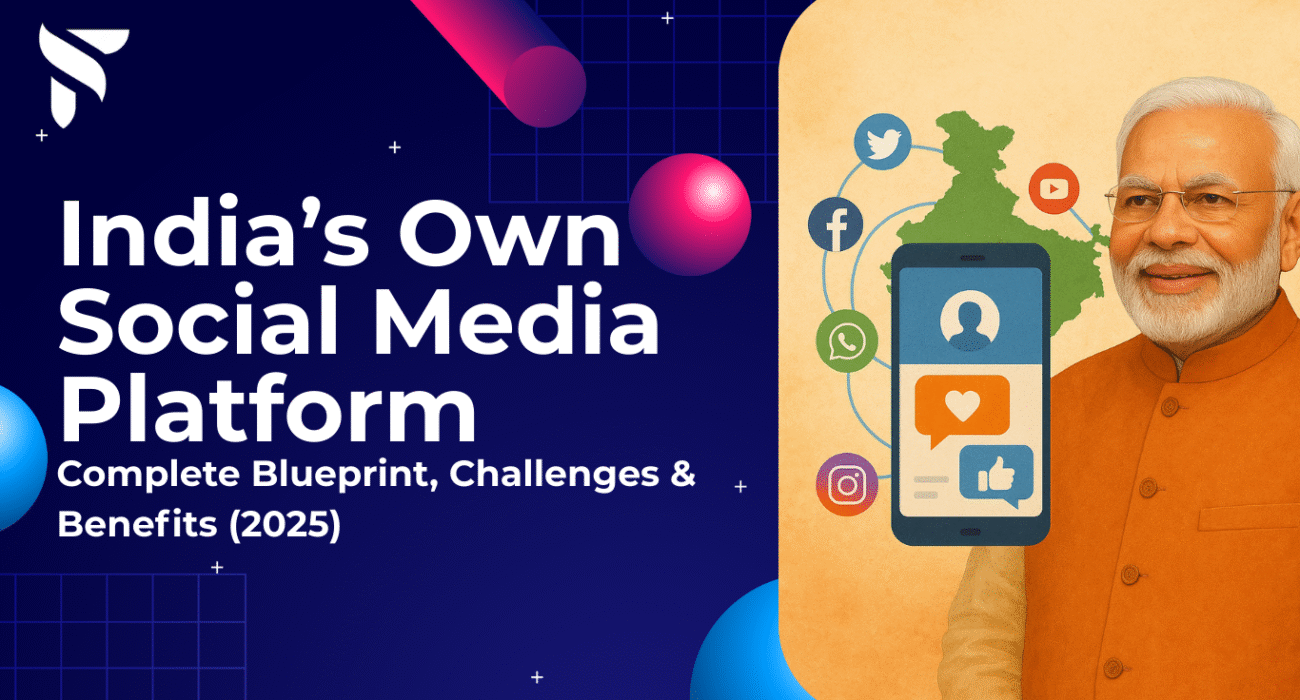
In an era where digital sovereignty is rising to the level of national security, the idea of India’s Own Social Media Platform isn’t just futuristic—it’s imperative. As India redefines its digital journey, there’s a surging realization: the platforms we use should not only entertain, but resonate with our values, protect our data, and represent our stories.
Why the Urgency Around This Idea?
Digital Sovereignty Reimagined
Digital sovereignty means retaining control over how data is stored, processed, and governed. Recent policy shifts—including the DPDP Act, 2023—signal India’s intent to legally own and safeguard how data moves in its jurisdiction. A platform designed in India, for India, strengthens that framework.Cultural Representation—Finally, a Voice that Feels Like Home
Western feeds aren’t inherently bad, but a platform that centers Indian languages, festivals, traditions, and regional flavors fulfills cultural inclusion in a way global giants can’t.Policy Momentum Favors Local Innovation
Regulations like the IT Rules, 2021, push for platform accountability and quick grievance handling. Add the success of public digital infrastructure (like UPI and Aadhaar), and there’s a template for building localized digital platforms with trust and scale.Combating Digital Impersonation & Scams
Fake profiles, impersonation, and fraud are persistent issues online. A locally governed platform could enforce stronger onboarding—like KYC verification—to truly root out impersonation attempts.
Key Benefits for the Indian Community
A purpose-built social network could offer:
Data Kept in India, Governed by India’s Laws
Reduces dependence on overseas servers and aligns with compliance standards like DPDP for better privacy protection.Cultural Authenticity and Regional Inclusion
From content moderation in regional languages to festival-themed communities, it empowers Tier-2 and Tier-3 users.Trust Through Local Accountability
No vague overseas TOS—fast grievance redressal, transparency, and alignment with Indian ethos build trust.Empowerment for Local Creators
A creator-centric platform can offer fairer monetization and equitable visibility, especially for regional creators often overshadowed on global apps.
Real Challenges We Can’t Ignore
Creating something truly transformative means grappling with:
Scalability
Millions of users demand infrastructure comparable to big global players. India’s rapidly expanding cloud market—projected at $21.4 billion in 2025—shows capacity is growing.Content Moderation vs Free Speech
Balancing open dialogue with community safety is complex—especially in India’s linguistically and socially diverse context.Convincing Users to Switch
Most Indians are already embedded in Meta or YouTube ecosystems, making adoption a tough uphill climb.Sustainable Revenue Models
Creators need consistent, transparent income—ads, subscriptions, brand partnerships—all engineered with context and fairness.
India Isn’t Starting From Zero
In 2020, the TikTok ban spurred homegrown apps—Moj, Josh, Chingari—but global platforms like YouTube Shorts quickly eclipsed them.
Koo emerged as an Indian microblog alternative during platform-government tensions, but lacked long-term traction and recently shut down.
These attempts offer lessons: Indian platforms can be built, but need sustained backing, tech robustness, and creator-friendly models to thrive.
A New Kind of Social Media—Indian by Design
It’s not about recreating Facebook—it’s about reimagining social media:
Local-First, Not Western-First
Prioritize regional languages, local trends, and Indian festivals over global homogenization.Positive Over Toxic
AI-enabled encouragement for uplifting content, cultural exchanges, and meaningful connections.Transparent, Not Manipulative
Clear policies, visible moderation standards, and community trust baked in.Creators First
Fair revenue sharing, regional spotlight features, and tools supporting local monetization.
Why the Time Is Right
India is reinventing its digital DNA. From data policies that prioritize localization, to DPI frameworks that enabled UPI and Aadhaar, the foundation is set. Add to it growing user distrust in opaque content algorithms and rising demand for culturally rooted platforms—and the moment to act is now.
Final Thought
India’s Own Social Media Platform isn’t just a tech project—it’s a cultural movement. It’s about building a digital space that feels Indian, stays Indian, and safeguards Indian values. The road ahead is steep, but also unprecedented in its potential.
What features or values matter most to you in such a platform? I’d love to hear your vision.
FAQs
Q1: Why does India need its own social media platform?
A: India needs its own social media platform to protect user data under the DPDP Act 2023, promote cultural representation in digital spaces, and ensure accountability with IT Rules 2021. It would also reduce dependence on global platforms that may not align with India’s laws and values.
Q2: How will India’s Own Social Media Platform benefit creators?
A: A homegrown platform can offer fair revenue-sharing, transparent monetization models, and better visibility for regional creators who are often overshadowed on global apps.
Q3: What challenges will India face in building its own social media platform?
A: Key challenges include scalability for millions of users, balancing free speech with content moderation, convincing users to switch from global apps, and ensuring sustainable monetization for creators.
Q4: Has India tried to build social media apps before?
A: Yes. Apps like Koo, Moj, and Chingari emerged after TikTok’s ban, but most struggled with long-term traction. These attempts highlight the need for strong infrastructure, government backing, and better creator incentives.
Q5: How is digital sovereignty connected to India’s social media vision?
A: Digital sovereignty ensures that Indian data stays in India and is governed by Indian laws. A national social media platform strengthens this sovereignty while offering citizens a safe, accountable, and culturally inclusive online space.